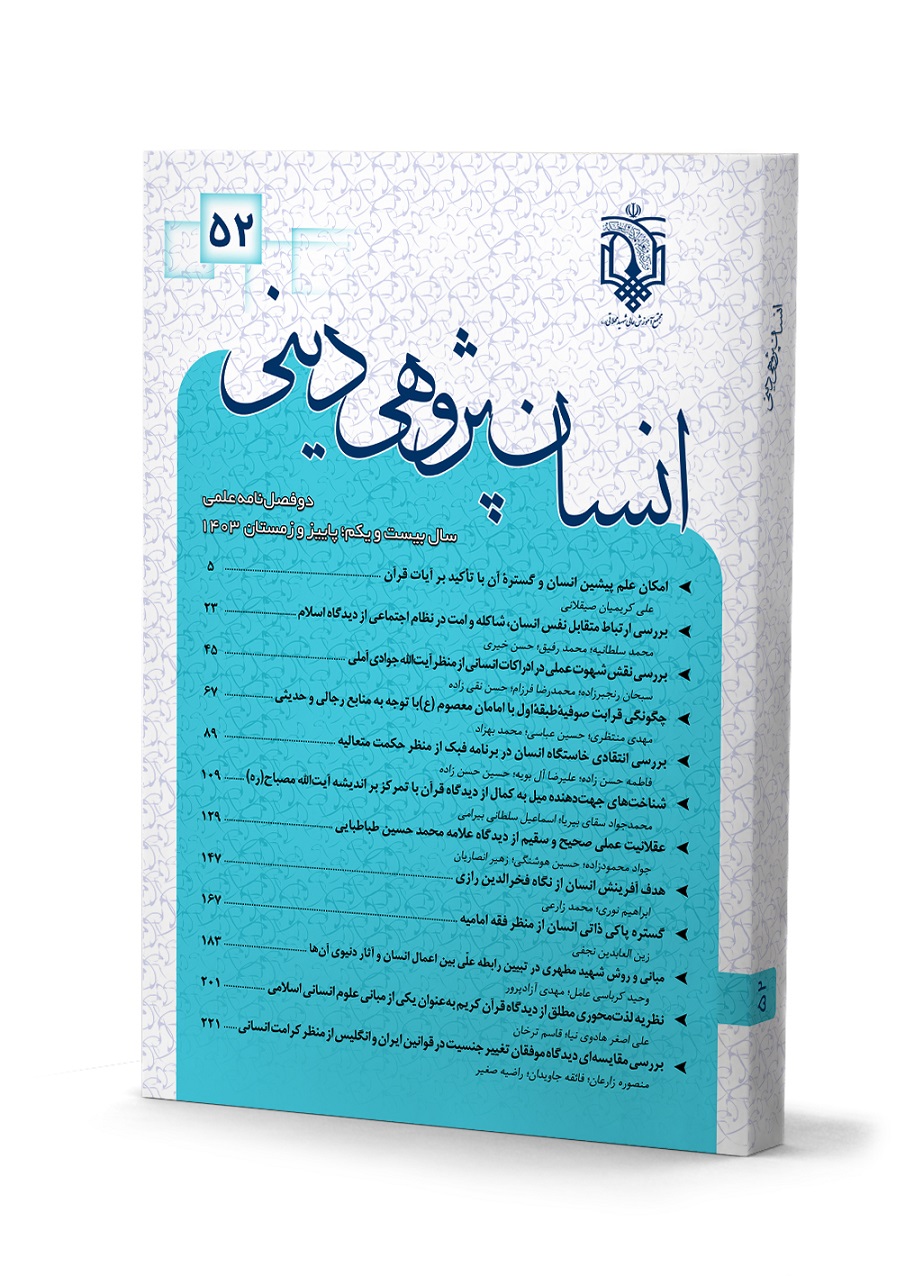
نوع مقاله : علمی - پژوهشی
عنوان مقاله English
نویسندگان English
In Islamic texts, we encounter a large number of verses and narrations that discuss the worldly effects of human actions. Morteza Motahhari has used various methods to explain the intermediate links between an action and its mentioned effect. For example, he says that regarding the relationship between piety and its effects, such as distinguishing between truth and falsehood, spiritual and physical health, and problem-solving, piety is not the immediate cause of these effects, and at least one or two intermediaries are involved. Acceptance of the principle of causality, the coexistence of spiritual and material causes, the non-exception of the principle of causality, the influence of multiple causes on material phenomena, the conditions for the effectiveness of spiritual causes, the precedence of spiritual factors over material factors, and attention to proximate and remote causes are among the fundamental principles of Motahhari in explaining the causal relationship between human actions and their worldly effects. By examining this category of religious texts through the method of Motahhari, one can correct the perspective of the religious community toward these texts and prevent extremism and excess in reconciling material and spiritual factors. For this purpose, a library-based research method was used to gather information, and then the information was evaluated using a descriptive-analytical approach. Also, by conducting a case study of piety and its effects, it becomes clear that with the use of these principles and the method obtained, one can explain and elaborate on the causal relationships mentioned in other verses and narrations.
کلیدواژهها English
قرآن کریم
* نهج البلاغه
https://www.eshia.ir/feqh/archive/text/fayazi/bedayeh/62/047/
7.کلینی، محمد بن یعقوب(1363)، الکافی، تصحیح علیاکبر غفاری، تهران: انتشارات دار الکتب الإسلامیه، چاپ چهارم